
10 Ways to Encourage Friendship for Children with Additional Needs
Summary
This article explores the importance of friendship for children with additional needs and provides practical tips to help them develop meaningful relationships. Suggestions include focusing on one relationship at a time, creating environments suited to their needs, encouraging shared interests, and using tools like conversation cards to facilitate communication. It also highlights the value of patience, understanding challenges, and managing expectations. Incredible Kids offers a safe, welcoming space where children can make friends and families can connect, supporting social and emotional well-being for all.

Friendship for children with additional needs (and everyone) is important because we share our joy and our trials with friends.
However, friendship can also be a source of mystery, frustration and anxiety in children with additional needs.
Why Friendship Can Be Challenging for Children with Additional Needs
Incredible Kids aims to help children and parents to make friends, so we’ve been thinking of our top ten ways to encourage friendship in children with additional needs.
- Focus one relationship at a time.
A scattergun approach to friendship makes it hard for your child to develop trust and mutual appreciation. Don’t expect them to make friends if you go to a different place with a different set of people every day.
- Be patient
Our own expectations around friendships can frustrate friendship progress. When setbacks occur we need to take a longer term approach. Sometimes our children may just need a year or two to grow older and wiser before a friendship can flourish.
- Find common interests
Whether your child loves Minecraft or making slime, a shared interest can make conversations easier. If your child enjoys cycling, perhaps joining a special needs cycling group would help to open up and encourage new friendships?
- Create the right environment
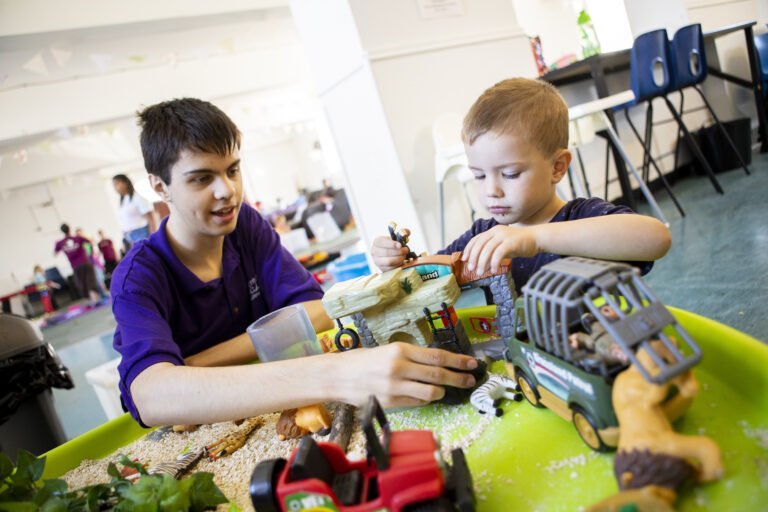
Places which are geared up for children with additional needs help remove some of the barriers to friendship building. A place where you can be yourself and have fun makes it easier. When everyone around you has an understanding of additional needs, the pressure is off.
- Encourage conversation
If your child finds small talk and speaking tricky then find ways to make this less intimidating. Games such as conversation cards can be used to facilitate structured conversations so no-one has to think too hard about what to say.
- Don’t set them up to fail.
Four years ago I organised a whole class party with 33 other children as a joint party with another parent. Somehow I had underestimated the needs of my child and the expectations another family would have for the party. Unfortunately it ended badly with my child crying whilst everyone sang happy birthday.
Take time to think through what your child can cope with before making plans. Do they need a structured activity with a small group, or just one other child?
- Understand the challenges
I can only spend about an hour talking to people. After that I’m useless to anyone. I’ve learnt that when my friends want to visit I have to risk being rude by telling them they can stay for an hour.
Many children with additional needs find it hard to play or talk on anything more than a 1:1 basis. Expect setbacks when other children get involved. Its part of the learning process and you can’t avoid it completely.
- Friendship is complex
Think about your own friendships. There are many nice people in the world but we only develop close friendships with a few of them. The reasons why we pick certain people and not others are many and complex.
Most of my friends have the shared experience of having a child with additional needs and understand the unique challenges involved. But that doesn’t mean I form a close friendship with everyone who has this experience; it’s much more complex than that.
- Manage your own expectations
Doing all of these things is a good start but expecting everything to change overnight is unrealistic. Ensuring we manage our expectations can release some of the pressure we inadvertently place on situations and our children.
- Be kind to yourself
You’re doing a great job and its obvious you care otherwise you wouldn’t be reading this! Take one day and one moment at a time and remember to be kind to yourself.
What strategies have worked for you in helping your child build friendships?
Friendship is not just important for children—it is vital for parents and carers too. At Incredible Kids, we understand how important connections are for the whole family. When children engage in meaningful play and begin to develop friendships, parents often find themselves building their own support networks. Meeting others who understand the challenges of raising a child with additional needs can be transformative, offering practical advice, emotional support, and, most importantly, a sense of belonging.
That’s why our sessions are designed to create a safe and welcoming space for everyone. Whether it’s a child discovering the joy of sharing a toy or a parent connecting over a shared experience, these moments of connection make a lasting impact. If you’re looking for a place where your child can play and develop friendships while you relax with a cup of tea and meet like-minded families, we invite you to join us at Incredible Kids.
Incredible Kids is a place where we work hard to encourage friendship in children with additional needs.
We have developed a special place for families that have a child with any additional needs or disability to come and spend time together.
You can meet other parents in a similar situation while your children have fun in a place where you are all welcomed, accepted and understood.
Register today as a member and come and enjoy a cup of tea with us.